
English| EUR
Suggested for you
More currencies
Choose a language
Kakadu covers almost 20,000 square kilometres of floodplain, escarpment and monsoon forest, and it is one of the few World Heritage sites listed for both natural and cultural value. Thousands of people sleep here every year without incident, but they do it inside a system of designated campgrounds, ranger advice and posted closures. This page sets out what that system covers, where it stops, and how to read it before you pitch a tent.
Quick answer
Camping in Kakadu is safe when you use designated campgrounds and follow Parks Australia signage. Access runs 07:00–19:00 daily, and a 25 AUD seven-day park pass applies to foreign adults, with prices varying by season. The single largest risk is not wildlife but improvisation: camping outside marked sites, ignoring closures, or arriving after dark on unsealed roads.
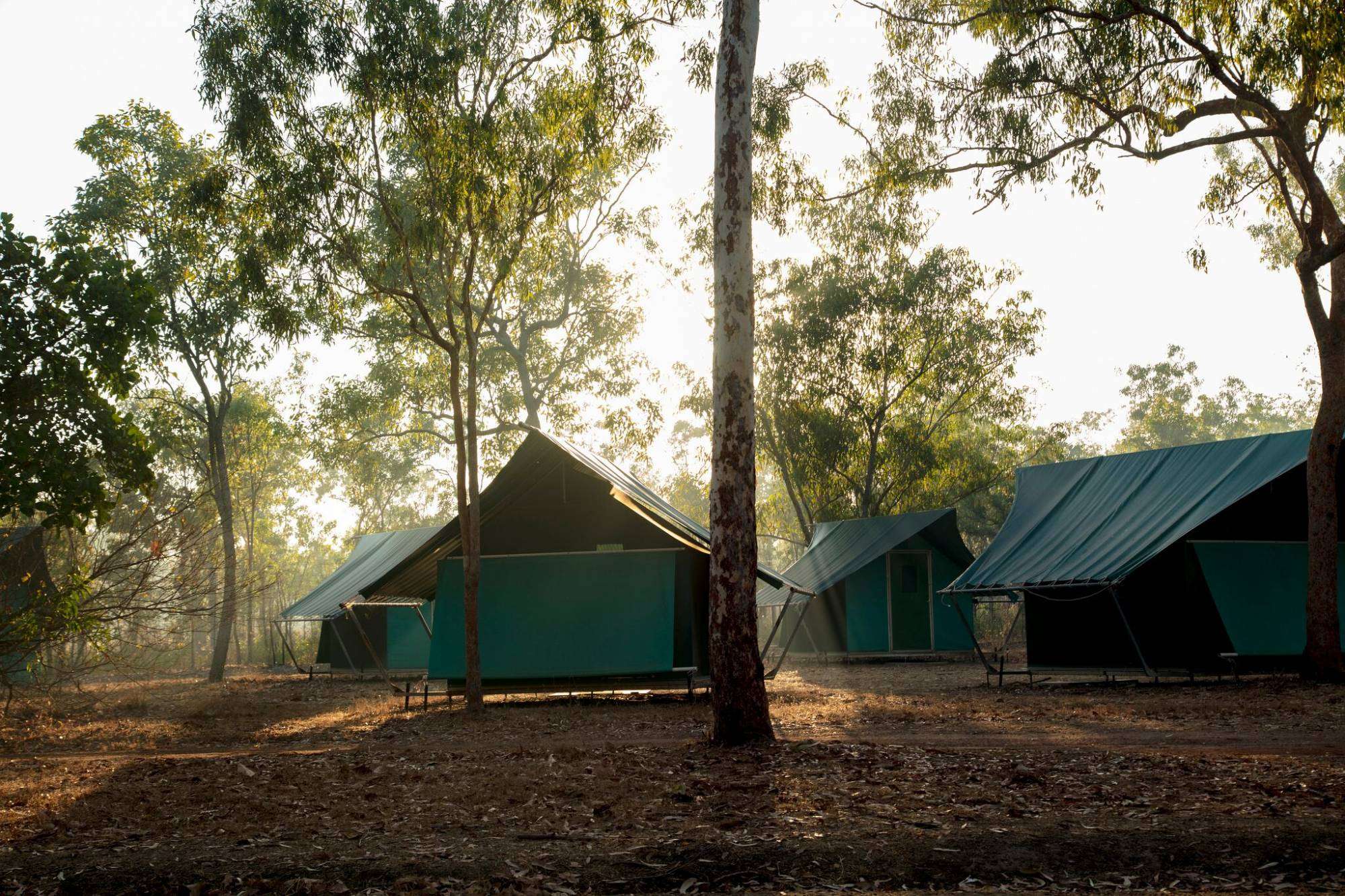
Kakadu is not a wilderness in the unowned sense. It is Aboriginal land, leased back and jointly managed, and the Bininj and Mungguy Traditional Owners have shaped where visitors may sleep for decades. That governance is why the question "is it safe to camp in kakadu" has a clearer answer here than in many remote parks: the safe ground has already been identified, mapped and serviced. Campgrounds like Merl, Muirella Park, Mardugal, Gunlom and Garnamarr exist because someone assessed the floodplain edge, the billabong margins and the escarpment access and decided where a tent belongs. Bush camping outside those sites is generally not permitted, and the permission structure is not bureaucratic friction — it is the safety mechanism itself. The practical shape of Kakadu camping safety is therefore less about heroics and more about compliance and self-sufficiency. Distances are long. Jabiru, Cooinda and Ubirr sit hours apart on roads that range from sealed highway to four-wheel-drive-only tracks toward Jim Jim Falls and Twin Falls. Mobile coverage disappears quickly outside the townships. Park access sits within a 07:00–19:00 window, which governs when gates and many road sections can be used, and the Bowali Visitor Centre remains the place to confirm current conditions on the day. Rangers close swimming holes, tracks and whole campgrounds without much notice when water levels, road surfaces or wildlife assessments change, and those closures are enforced rather than advisory. A camper who checks conditions each morning, carries more water than the day appears to need, and tells someone their route has removed most of the risk before leaving the car park. What this means for planning is straightforward. Treat the Kakadu National Park camping question as a logistics problem, not a courage problem. Choose a campground with the facilities matching the trip — some have showers and generators, others are basic bush sites reachable only by high-clearance vehicle. Book or confirm availability rather than assuming space. Anyone still asking is it safe to camp in kakadu should read the answer as conditional: yes, within the designated system, with current ranger information, on a timetable that respects the gate hours and daylight. Guided camping trips remove several of these variables at once, which is why they suit first-time visitors and anyone without a suitable vehicle. Parks Australia publishes current campground status at parksaustralia.gov.au/kakadu, and the park office answers on +61 8 8938 1140.
“The safe ground in Kakadu has already been identified, mapped and serviced — the permission structure is not bureaucratic friction, it is the safety mechanism itself.”
Kakadu's rules exist because saltwater crocodiles inhabit nearly every waterway in the park, and campfires can escape quickly in dry savanna. Following ranger signage and staying inside designated camping areas is what keeps the risk manageable.
The dry season, specifically from May to September, offers the most stable conditions for camping in Kakadu. During this period, lower humidity and minimal rainfall allow safer access to campgrounds and walking tracks.
Warm days 30°C to 33°C
Clear skies and dry roads allow for consistent travel across the park.
Hot, humid, 33°C+ with heavy storms
Frequent flooding leads to many campsite closures and restricted road access.
High humidity, temperatures exceed 35°C
Rising heat levels increase health risks and limit outdoor activity options.
Verdict: The safest window for camping is the dry season between June and August, arriving at the park shortly after the 07:00 opening time.
Camping safely in Kakadu depends on gear you organise well before you leave sealed roads, since much of the park sits far outside mobile coverage.
Kakadu National Park is open daily to visitors. Please plan your arrival between 07:00 and 19:00 to avoid midday heat and ensure safe entry.
Park entry fees for Kakadu National Park depend on the visitor's residency status and the time of year. All international visitors are required to purchase a park pass to access the grounds.
Verdict: A typical foreign adult pays 25 AUD for a 7-day pass, though the final cost may vary by season.
Everything you need to know about is it safe to camp in kakadu
Camping is a popular activity in Kakadu National Park, but visitors must remain vigilant regarding their surroundings. When asking if it is safe to camp in Kakadu, the answer depends on adhering to park signage and following established safety protocols for remote areas.
Environmental hazards such as wildlife, specifically crocodiles, and extreme weather conditions are primary concerns for visitors. Determining if it is safe to camp in Kakadu requires staying informed about seasonal changes, as certain areas may be inaccessible or unsuitable for camping during the wet season.
While many campgrounds in the park operate on a first-come, first-served basis, checking official resources before your arrival is recommended. Ensuring your site selection is safe to camp in Kakadu involves confirming that you are in a designated zone rather than a restricted area.
The entrance fee is 25 AUD for a 7-day park pass for foreign adults, though prices vary by season. Understanding these costs is part of planning, as is confirming if it is safe to camp in Kakadu by reviewing the latest alerts on the official Parks Australia website.
Yes, there are strict regulations regarding fire usage, waste disposal, and food storage to keep the ecosystem and visitors secure. Many travelers inquire if it is safe to camp in Kakadu, and the success of the trip relies on respecting these guidelines to prevent negative wildlife interactions.
Families can enjoy the park by staying in well-maintained campgrounds and monitoring local alerts. To ensure it is safe to camp in Kakadu with children, always supervise them closely near water and follow all posted park instructions regarding prohibited activities.
The best arrival window is 07:00–19:00 to avoid midday heat and ensure arrival before gate closure for safety. Planning your transit within this timeframe is a crucial step in maintaining a secure experience while exploring the park.